
Moneyline Meaning in Sports Betting: Outright Winners and Value Selection
New to the terminology? Start with our sports betting basics to see how events, markets, odds, stakes and settlement fit together.
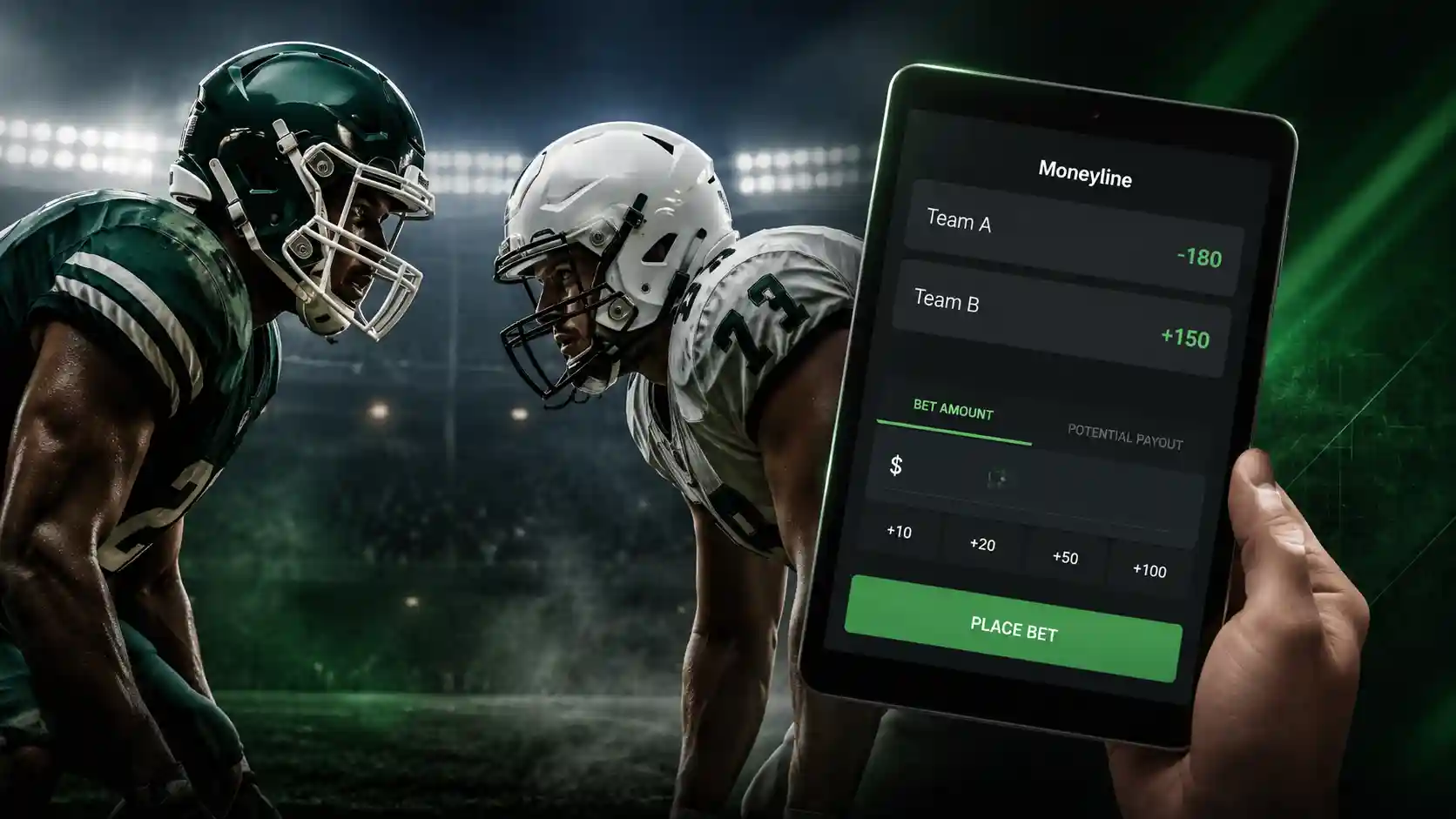
Moneyline meaning becomes clear when the market is treated as a direct choice of the outright winner. This moneyline meaning in sports betting guide explains favourites, underdogs, decimal prices, potential returns, and the difference between a moneyline and a point spread.
- Pure Outcome Wagering: No point spreads or goal handicaps; the only condition for winning is your selected team winning the contest.
- Decimal Pricing Representation: Lower decimal prices represent favorites (e.g., 1.35), while higher prices represent underdogs (e.g., 3.20).
- Overtime Inclusion: In basketball (NBA, PBA, MPBL), standard 2-way moneyline bets include points scored during overtime periods.
- Draw Rules in Football: Standard 3-way moneyline (1X2) bets in association football grade regulation draws as distinct outcomes.
- Bankroll Risk Management: Moneyline wagering on heavy favorites requires cautious stake allocation due to asymmetrical risk-to-reward ratios.
How Moneyline Betting Works in Basketball (NBA & PBA)
In basketball competitions such as the Philippine Basketball Association (PBA) or the NBA, matches cannot conclude in a draw. Games tied at the conclusion of four regulation quarters advance into five-minute overtime periods until a victor emerges.
Because of this definitive outcome structure, basketball sportsbooks offer 2-Way Head-to-Head (Moneyline) markets. Consider an illustrative PBA Governors' Cup fixture:
- TNT Tropang Giga: 1.52 (Favorite)
- Magnolia Hotshots: 2.50 (Underdog)
If you stake ₱1,000 on TNT Tropang Giga and they win 98-96 in overtime, your wager is graded as a winner, returning ₱1,000 × 1.52 = ₱1,520.00. Even though the margin of victory was only two points, TNT's outright win satisfies the moneyline condition completely. If you had staked ₱1,000 on Magnolia and they lost, your entire stake is lost.
| Matchup Context | Team Selection | Decimal Odds | Stake (₱) | Potential Payout | Net Profit |
|---|---|---|---|---|---|
| Lopsided Clash | Dominant Contender | 1.20 | ₱2,000.00 | ₱2,400.00 | ₱400.00 |
| Lopsided Clash | Major Underdog | 4.50 | ₱500.00 | ₱2,250.00 | ₱1,750.00 |
| Competitive Derby | Slight Favorite | 1.75 | ₱1,000.00 | ₱1,750.00 | ₱750.00 |
| Competitive Derby | Slight Underdog | 2.10 | ₱1,000.00 | ₱2,100.00 | ₱1,100.00 |
When to Bet the Moneyline vs. Point Spread
A central tactical decision for sports enthusiasts is choosing between the moneyline and the point spread. Understanding when each market offers superior mathematical utility is crucial:
- Backing Live Underdogs on the Moneyline: When you identify an underdog with genuine upset potential (due to matchup advantages, rest disparities, or opposing injuries), taking the moneyline at 2.40 to 3.50 delivers far superior multiplier value than taking +4.5 points on a spread at 1.90.
- Avoiding Excessive Juice on Heavy Favorites: Laying heavy moneyline stakes on 1.15 favorites carries severe negative risk asymmetry—a single upset erases the profits of six to seven consecutive winning wagers. In such instances, backing the favorite on the point spread (-8.5 at 1.90) is generally the preferred approach.
- Close Rivalry Games: In games with projected margins under 2 points, taking the favorite on the moneyline (e.g., 1.80) eliminates the risk of winning by exactly 1 point and failing to cover a -1.5 spread.
Moneyline Nuances in Football: 2-Way vs. 3-Way Markets
In association football (soccer), regular-season fixtures frequently end in draws after 90 minutes plus stoppage time. This introduces a critical distinction:
- 3-Way Moneyline (1X2): Offers three choices: Home Win (1), Draw (X), or Away Win (2). If the match concludes 1-1, wagers on Home or Away lose.
- Draw No Bet (DNB): Eliminates the draw option. If the match ends in a draw, your original stake is fully refunded (graded as a push).
- Double Chance: Combines two outcomes (Home/Draw or Away/Draw) into a single lower-priced wager.
Bankroll Preservation on Moneyline Markets
Because underdog moneyline bets have lower win rates, they experience higher variance. Maintain disciplined unit sizing—never risk more than 1% to 2% of your bankroll on an underdog moneyline ticket, regardless of perceived value.
Sources and Methodology
How this article was prepared
- Examples are calculated from the formulas shown in the article and are educational rather than live bookmaker prices.
- Odds display and settlement conventions can vary by operator and market, so current platform rules should be checked before use.
See our Editorial Policy for sourcing, corrections, and commercial-independence standards.
Compare Current Prices With the Formula in This Guide
Check the exact market, line, price, implied probability, margin, and settlement rule before confirming any selection on the partner platform.
Frequently Asked Questions
A moneyline wager is a straightforward bet on which team or competitor will win the match outright, with no point spread handicap applied.
In basketball, moneyline bets generally include overtime periods unless specifically designated as regular-time 3-way (1X2) markets.
Underdogs have lower statistical win probability, requiring higher decimal multiplier odds to attract balancing betting volume.